
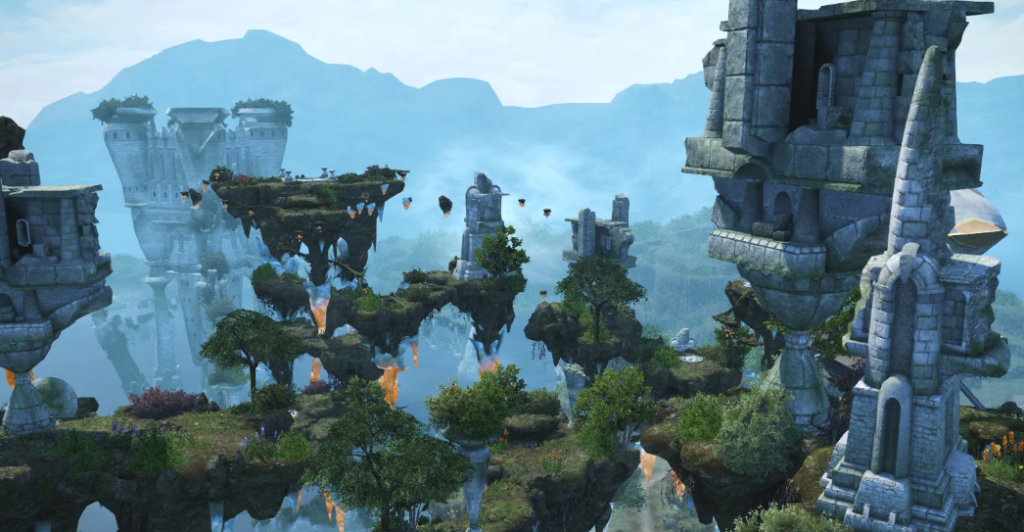
The first time I logged into a large scale online game world, I did not just feel like I was playing something. I felt like I was entering somewhere.
That difference matters.
Years ago, most games felt like levels. You cleared them, moved on, and forgot them. Today, many online games feel like persistent universes. Cities have histories. Factions have politics. Landscapes tell stories without a single line of dialogue.
Worldbuilding in online games has reached a point where virtual environments often feel more immersive than traditional media. And from my experience watching this evolution, it is not accidental. It is the result of deliberate narrative design, technological growth, and community driven ecosystems.
From Static Maps to Living Worlds
Early multiplayer games focused on mechanics. Maps were arenas. Lore was optional.
But as online infrastructure improved, developers realized something powerful. If players are going to spend hundreds or even thousands of hours inside a digital space, that space needs depth.
Games like World of Warcraft demonstrated how layered worldbuilding could sustain engagement for decades. Entire continents had cultural identities. NPC dialogue hinted at political conflicts. Environmental design reflected historical events.
What made it convincing was consistency.
A believable world follows internal logic. Architecture matches climate. Clothing reflects culture. Music supports geography. When those elements align, the brain starts accepting the space as coherent.
And coherence creates immersion.
Persistence Changes Everything
One major reason online worlds feel real today is persistence.
Unlike single player campaigns that end, online games continue evolving. Events reshape regions. Expansions alter maps. Characters grow within shared timelines.
Take Final Fantasy XIV as an example. Its original launch struggled, but the rebuilt version integrated narrative progression directly into gameplay updates. Entire story arcs reshaped the political landscape of its universe.
Players were not just spectators. They were witnesses to change.
When a world remembers what happened last year, it starts to feel alive.
Player Agency as Worldbuilding
Another shift that fascinates me is how much player behavior now contributes to world depth.
In sandbox driven games like EVE Online, corporations wage wars that alter economic structures for months. Player alliances create real political tension. Massive battles generate headlines outside gaming media.
That kind of emergent storytelling cannot be scripted traditionally.
It happens because developers design systems rather than rigid narratives. When players control trade routes, territory, or resources, they effectively co author the world.
From a worldbuilding perspective, that is revolutionary.
It transforms a game universe from authored fiction into collaborative history.
Environmental Storytelling
One subtle but powerful technique modern online games use is environmental storytelling.
Instead of relying only on dialogue or cutscenes, designers embed narrative clues directly into architecture and terrain.
Ruined fortresses suggest past wars. Abandoned villages imply plagues. Weather patterns reinforce regional identity.
Open world online titles frequently design areas where no explicit quest marker exists, yet the environment itself communicates a story.
This approach mirrors techniques found in immersive single player games, but at scale. The challenge online is ensuring these details remain meaningful even as thousands of players move through them simultaneously.
When done well, it creates a layered experience. Casual players enjoy mechanics. Lore focused players uncover deeper context.
Social Presence Amplifies Reality
One element that single player games cannot replicate at the same level is social presence.
Seeing dozens or hundreds of other players occupying the same digital space changes perception dramatically.
A marketplace filled with avatars feels economically active. A raid group assembling outside a dungeon entrance creates anticipation. Festivals or seasonal events generate shared memory.
The psychological effect is significant. Humans interpret crowds as indicators of importance and legitimacy. When a virtual city feels populated, it feels functional.
And functionality enhances believability.
Technology and Scale
Advancements in graphics engines, server architecture, and procedural generation have also expanded worldbuilding capacity.
Modern online games render detailed lighting systems, dynamic weather, and massive terrain maps without sacrificing performance.
Some open world environments now span areas comparable to real world cities. Map design integrates fast travel systems, regional economies, and biome diversity.
Cloud based infrastructure allows developers to maintain persistent states across global player bases. That means your actions today can influence conditions tomorrow.
The scale itself contributes to realism. Vastness suggests complexity. Complexity implies authenticity.
Cross Media Influence
Another interesting factor is how online game worldbuilding now influences and is influenced by other media.
Many franchises expand beyond games into novels, animated series, and live events. Lore becomes transmedia.
This multi platform presence reinforces world consistency. A character introduced in a game may appear in an animated adaptation, deepening narrative immersion.
When a universe exists across formats, it gains cultural weight. It stops being “just a game” and starts becoming a mythos.
Why It Feels More Real Than Ever
From my perspective, the realism of modern online game worlds comes down to five core elements:
- Internal narrative consistency
- Persistent timelines
- Player driven impact
- Environmental storytelling
- Social population density
Combine these with technological scale and you get something powerful. A digital universe that feels stable enough to believe in.
And belief is the key.
We do not need photorealism to feel immersion. We need logic, consequence, and participation.
Online games have learned to provide all three.
The Future of Virtual Universes
Looking ahead, I suspect the boundary between game worlds and social platforms will continue to blur.
Virtual spaces may increasingly function as creative hubs, economic systems, and storytelling arenas simultaneously.
Developers are already experimenting with user generated content systems that allow players to design quests, cosmetics, or even sub regions within larger worlds.
If that trend continues, worldbuilding will not just be crafted by studios. It will be shaped collaboratively at scale.
That idea excites me.
Because at its best, worldbuilding is not about building a map. It is about constructing a space that feels internally alive.
Online games have reached a point where they are not just levels to complete. They are universes to inhabit.
And for many players, that makes them feel more real than ever.